


Finding dark spots in your shower grout is a common household challenge. A bathroom is naturally warm and damp, which can create the right conditions for mold to appear.
This is a manageable issue. Here’s how to clean safely and simply.
Understanding Mold in Your Shower Grout
The term "black mold" often refers to common household mold that thrives in moist environments. Its presence is a sign that an area is holding onto too much moisture.
Understanding why it appears is the first step toward managing it effectively. A clean home is a peaceful space, and knowing your family is safe brings comfort. Addressing shower mold is a simple act of care for your home and the people in it.
Why Your Shower is an Ideal Spot for Mold
A shower provides everything mold needs to grow. It is consistently damp from daily use, and warm steam creates humidity. Small amounts of soap scum and skin cells can also provide a food source. Grout is porous, meaning it has small holes that can trap water.
When these conditions combine, mold may begin to grow. Managing it is about managing these simple environmental factors.
Grout's porous nature is a key factor. It can absorb water during a shower, and without good airflow, that moisture can linger. This is why mold often appears in corners or along the floor where water collects. This is a common issue in many homes.
The key factors for mold growth in a shower are usually quite simple.
Key Factors for Mold Growth
| Factor | How It Contributes to Mold | How to Observe It |
|---|---|---|
| Lingering Moisture | Water droplets and condensation provide the hydration mold needs. | Check for water on tiles or grout an hour after showering. |
| Poor Ventilation | Trapped steam keeps surfaces from drying out completely. | Notice if the bathroom mirror stays fogged long after a shower. |
| Organic Matter | Soap scum and body oils can act as a food source for mold. | Look for a hazy or sticky film on tiles and glass doors. |
| Darkness | A lack of consistent light can allow mold to grow undisturbed. | Mold often appears first in darker corners of the shower. |
Paying attention to these four factors can help you get ahead of mold growth.
The core of managing shower mold is understanding its root cause: persistent moisture. A proactive approach focuses on moisture control as much as on cleaning.
Sometimes, a moisture problem can be related to other issues. Learning to spot common household water leaks can be helpful for prevention.
When you address the source of dampness, you create a space where it is more difficult for mold to grow. This simple shift supports a healthier home with less scrubbing.
How Shower Mold Affects Your Home
A clean home is about creating a healthy and peaceful space for your family. Dealing with black mold in the shower is a practical task that can improve your home's indoor environment. It contributes to a sense of well-being.
Mold can release microscopic spores into the air. In a contained space like a bathroom, these spores can circulate when a door is opened or a fan is turned on.
This is why a clean shower is about more than just appearance. It provides peace of mind, knowing the air your family breathes is cleaner.
Air Quality and Family Well-being
The air inside our homes is an important part of our health and comfort. When mold grows in a bathroom, its spores can affect this balance, especially for children, pets, or sensitive individuals.
These airborne particles can be inhaled. There is a connection between indoor mold and respiratory symptoms like coughing and wheezing. You can explore findings from research on black mold exposure.
A musty smell can be a sign of active mold growth. By managing shower mold, you are taking a step to improve the air quality where your family starts and ends each day.
The Impact on Sensitive Individuals
For some people, the presence of mold spores is more noticeable. Anyone with a pre-existing respiratory condition may find that a clean indoor environment supports their daily comfort.
A proactive approach to cleaning helps keep potential irritants out of the air. The choice of cleaning products is part of this. Considering cleaning products for asthma sufferers is a practical step toward creating a more serene home.
A clean, mold-free shower contributes to a home where everyone can breathe a little easier. It's a small act of care that supports overall comfort.
Ultimately, addressing black mold in your shower is an act of consideration for your family. It is not just about removing a stain; it also helps protect the integrity of your grout and tile by stopping growth that could cause damage over time.
Common Approaches to Cleaning Shower Grout
When black mold appears in shower grout, many people reach for a strong cleaner. The goal is to remove it safely without introducing harsh elements into your home. Some common cleaning methods can have unintended consequences.
Harsh chemicals can create new problems, from strong fumes to damaged surfaces. Let's walk through some common missteps in grout cleaning.
The Issue with Harsh Chemicals
Many people use chlorine bleach or ammonia for difficult cleaning jobs. While they seem effective, they have downsides in a small space like a bathroom. The fumes can be strong and linger, which is not ideal for your family's air quality.
These chemicals can also be corrosive. Over time, they may damage grout, making it more porous and creating a better environment for future mold. This can lead to a cycle of cleaning without resolving the issue.
It is also important not to mix certain chemicals. Combining bleach and ammonia, for instance, creates a toxic gas. It is a risk that is not necessary for a clean shower.
A common mistake is thinking the mold is gone when only the stain has been bleached. Harsh cleaners may whiten the surface while leaving the mold's roots inside the porous grout.
A gentler, more targeted approach can be more effective. If you are curious about other options, learning how to disinfect without bleach can be a good starting point.
Accidentally Damaging Grout and Tile
Shower surfaces can be more delicate than they appear. Grout is a porous material, which makes it susceptible to both mold and damage from harsh cleaning methods.
Scrubbing too hard with abrasive tools like a wire brush can cause problems. It is possible to scratch tiles or chip away at the grout. This creates more tiny crevices for moisture and mold to settle into. Damaged grout can also compromise the waterproof seal of your shower.
Once grout is damaged, it can become a magnet for dirt, making future cleaning more difficult. A successful cleaning job leaves your grout clean and intact.
A Better Way to Clean Your Shower
The sight of mold in your shower can be frustrating. However, there is a way to clean it effectively without harsh fumes or aggressive ingredients. This approach works with science to provide a gentle solution.
The key is a compound called Hypochlorous Acid, or HOCl.
HOCl is the same substance your body's white blood cells produce to fight germs. This makes it a smart choice for cleaning your home. It is effective on grime and mold yet gentle enough for spaces where your family and pets live.
The Simple Science of HOCl
Unlike cleaners that rely on harsh chemicals, HOCl works at a microscopic level. It is made using three simple ingredients: water, salt, and electricity. This process, known as electrolysis, transforms the saltwater solution into a powerful cleaning agent. It is free from fragrances, dyes, and harsh surfactants.
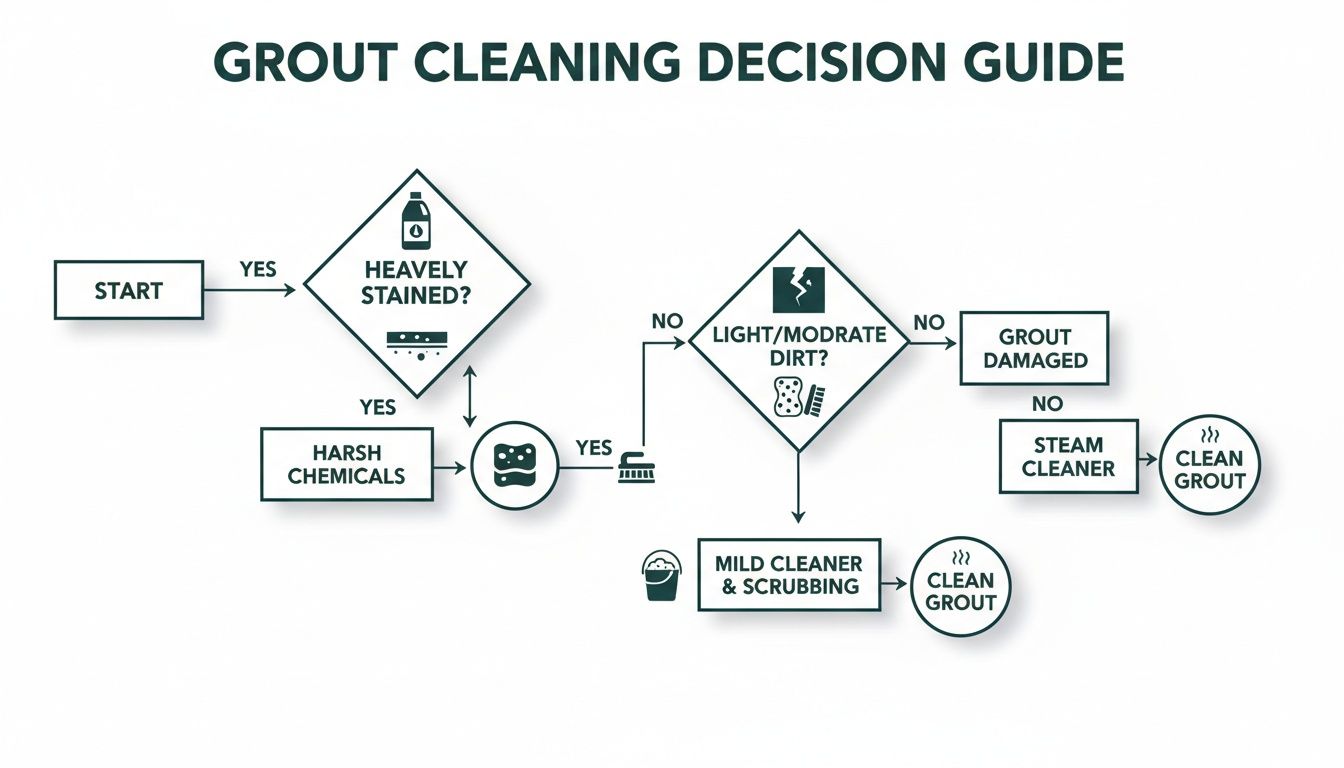
As this guide shows, choosing a gentler method can be effective. It also helps preserve the integrity of your grout.
One benefit of an HOCl-based cleaner is what it leaves behind: nothing. It cleans thoroughly and then reverts to a simple saline solution. Your surfaces are left clean without a sticky or chemical residue that can attract more dirt.
Comparing Cleaning Approaches
This table breaks down the differences between common cleaners and an HOCl-based alternative.
| Feature | Bleach-Based Cleaners | Ammonia-Based Cleaners | HOCl-Based Cleaners (Luma Living) |
|---|---|---|---|
| Active Ingredient | Sodium Hypochlorite | Ammonium Hydroxide | Hypochlorous Acid (HOCl) |
| Fumes/Odor | Strong, harsh chemical smell | Pungent, sharp odor | Odorless |
| Residue | Can leave behind a film | Often leaves streaks or film | Leaves no residue |
| Family Safety | Corrosive, skin/eye irritant | Eye/respiratory irritant | No harsh chemicals |
| Material Safety | Can damage or discolor colored grout | Can damage some surfaces | Safe for most surfaces |
| Environmental Note | Can be harmful to aquatic life | Can contribute to air pollution | Breaks down into simple saline |
The comparison shows that you do not have to trade effectiveness for safety.
True Peace of Mind
Choosing a cleaner is about trusting the products you bring into your home. With HOCl, there are no harsh fumes or strong artificial fragrances. It is a minimal approach that provides reassurance.
This is especially helpful in homes with children, pets, or sensitive individuals. You can clean the shower without worrying about what is left in the air or on surfaces. You can learn more about what Hypochlorous Acid is and the simple science behind it.
By shifting from harsh chemicals to intelligent science, you can manage everyday problems like black mold calmly and confidently.
How to Simply Clean Mold from Grout
Removing mold from shower grout does not require a complicated process. You can get the job done without harsh fumes or chemical residues. The method is straightforward, focusing on careful application and a thorough rinse.
Here is a simple, family-safe way to restore your grout.
Step 1: Prepare the Area
A little preparation makes the process smoother. The goal is to ensure good airflow and have your tools ready.
First, focus on ventilation. Turn on your bathroom's exhaust fan or open a window. Good airflow is always a good practice, even with a gentle cleaner. It also helps the area dry faster afterward, which helps prevent mold from returning.
Next, gather your supplies:
- A gentle cleaner: An HOCl-based solution like Luma Living is ideal because it cleans without harsh chemicals.
- A soft-bristled brush: An old toothbrush or a small grout brush works well.
- Gloves: It is a good habit to protect your hands while cleaning.
- A cup or cloth: You will need this for rinsing.
With your supplies ready, you can begin.
Step 2: Apply and Let Sit
The key to removing mold from grout is patience, not force. Allowing the cleaner to work reduces the need for heavy scrubbing.
Start by spraying your HOCl-based cleaner directly onto the discolored grout. Be sure to cover all affected spots thoroughly.
Now, let it sit for at least 10 to 15 minutes. This dwell time is important. It allows the solution to penetrate the porous grout and break down the mold.
After the time is up, use your soft-bristled brush to gently scrub the grout lines. You do not need to apply a lot of pressure. A light, circular motion will lift the loosened mold from the surface.
The best strategy is to let the science of the cleaner do the work. Gentle agitation lifts away what the solution has already broken down, preserving your grout.
Step 3: Rinse and Dry Completely
This final step is essential. A thorough rinse removes both the cleaner and any remaining mold particles.
Use a cup to pour clean water over the grout lines, or wipe them with a wet cloth. Continue rinsing until you are sure all the cleaning solution is gone.
After rinsing, dry the area completely with a clean towel. Removing moisture is your best defense against mold's return. Leaving the exhaust fan on for another 20 to 30 minutes can help ensure the grout is totally dry.
Keeping Your Shower Grout Clean
Your grout is clean. Now, the goal is to keep it that way. Preventing black mold is not about more scrubbing. It is about making small adjustments to your daily routine.
These simple habits make your shower a less inviting place for mold. By managing moisture and improving airflow, you can prevent mold from becoming a recurring issue.
Create a Drier Environment
Mold's most important resource is moisture. Reducing it is a key part of prevention. A few seconds of effort after each shower can make a significant difference.
Using a squeegee is a simple and effective habit. A quick wipe of the shower walls, glass, and tiles removes excess water droplets. This takes less than a minute but greatly reduces humidity.
Improve Air Circulation
Mold thrives in still, humid air. Getting the air moving is an easy way to combat this.
Turn on your bathroom's ventilation fan during your shower. Leave it running for 20 to 30 minutes after you finish. This removes steamy air before it condenses. If you do not have a fan, opening a window or placing a small fan in the doorway can also work well.
Consistent airflow is a silent guardian of clean grout. It helps create an environment where mold cannot thrive, with little extra effort.
The principle of controlling moisture and air applies to the whole home. You can explore these strategies for preventing mold in your home for a broader perspective.
Adopt a Simple Misting Routine
For added prevention, a light misting with a gentle cleaner can be helpful. This is about maintenance, not deep cleaning. It helps remove the soap scum that mold can use as a food source.
Once or twice a week, give your grout lines a light spray with an HOCl-based cleaner. No scrubbing or rinsing is needed. This minimal approach helps maintain a clean surface, making deep cleaning sessions less frequent.
By incorporating these three simple habits, mold prevention becomes part of your routine. You can work smarter, not harder, to keep your shower a clean and peaceful space.
At Luma Living, our approach is to make maintaining a healthy home simple. Our HOCl-based cleaner is designed to be an effective, residue-free solution you can trust around your family and pets. Discover the peace of mind that comes from a smarter, gentler way to clean at https://lumaliving.co.