


Mold in a front-load washer is a common household challenge. It develops in the damp spots where moisture lingers after a wash. The solution is straightforward: clean the rubber gasket, detergent drawer, and drum with a gentle, effective cleaner.
For lasting freshness, run an empty hot water cycle once a month. It’s also helpful to leave the washer door ajar after each use to allow moisture to evaporate. Here’s how to clean your washer safely and simply.
The Challenge with Front Load Washers
Front-load washers are energy-efficient, but their design can create a welcoming environment for mold and mildew. The airtight door seal, excellent for preventing leaks, also traps moisture inside the machine after a cycle is complete.
This warm, damp space is ideal for mold growth. It often appears as dark spots or a slimy film on the rubber gasket. It can also be found in the detergent drawer and inside the drum. This buildup is the source of the musty odor that can transfer to clean clothes.
Why a Clean Washer Matters for Your Home
A fresh-smelling laundry room is a pleasant part of a well-kept home. It is about ensuring your clothes, towels, and bedding are truly clean for your family and pets. A maintained machine also runs more efficiently and can have a longer lifespan. Consistent, gentle cleaning helps prevent the buildup that causes odors. This small step supports the freshness of every load.
A clean machine is the starting point for truly clean laundry. When the source of musty odors is managed, you can feel confident in the freshness of every load, from baby clothes to bedding.
This is a familiar issue in damp areas of a home. For instance, dealing with mold on bathroom grout is a similar challenge. If you're tackling that too, you can learn more about removing mold from bathroom tiles in our related guide.
The goal is to find a simple, safe way to manage washer mold without using harsh chemicals. Focusing on gentle, effective solutions provides peace of mind.
What Most People Get Wrong
If you have discovered mold in your front-load washer, the machine’s design is a primary factor. Its high-efficiency model, while saving water, presents a unique challenge.
Unlike top-loaders where air can circulate more freely, front-loaders create a nearly airtight seal. The rubber gasket on the door is excellent for preventing leaks. However, it also traps moisture inside the drum after every cycle. Once the door is shut, the dark, damp, and warm space becomes an ideal setting for mold. Water often pools in the folds of the rubber seal, in the detergent drawer, and on the drum's interior. This is a common issue and the reason for many complaints about musty-smelling laundry.
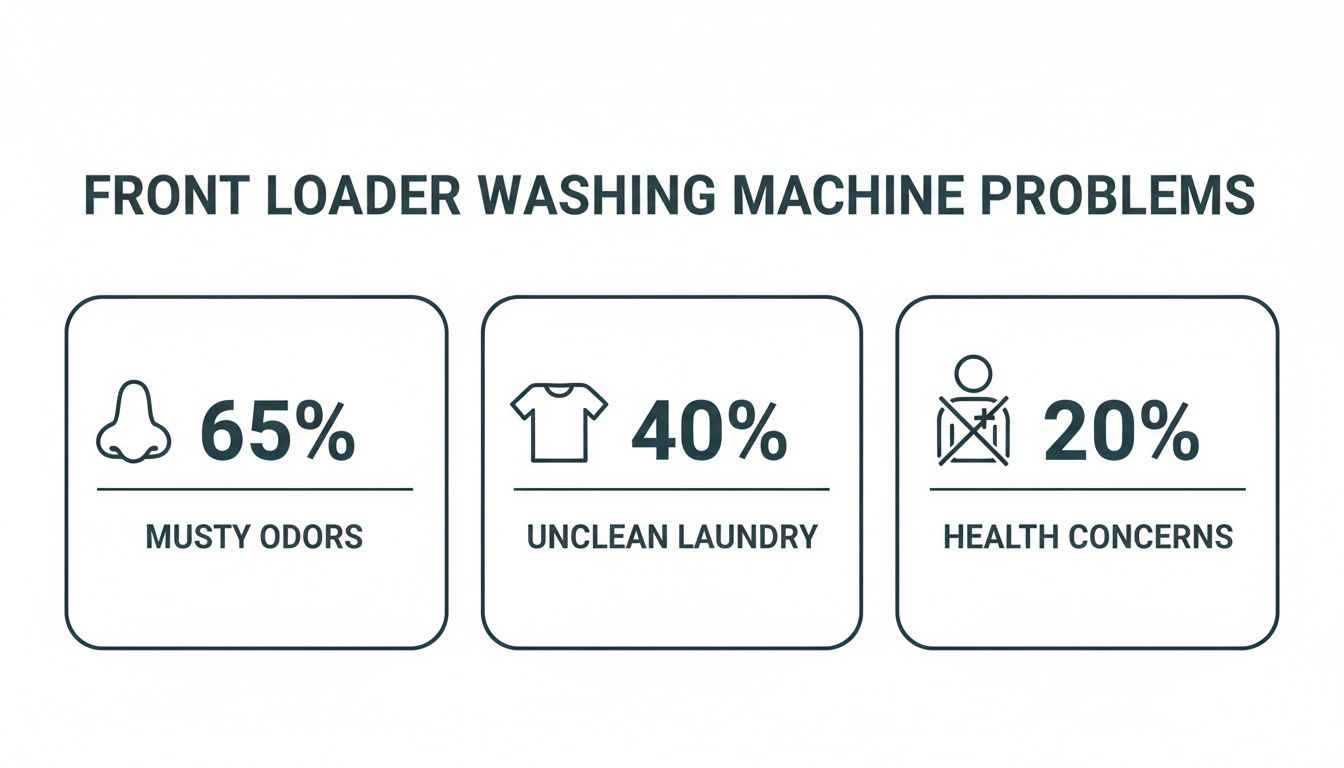
This trapped moisture directly contributes to odors and clothes that do not feel completely clean.
The Problem with Harsh Alternatives
When faced with washer mold, the impulse is often to use a strong chemical cleaner. Chlorine bleach or ammonia are common choices. While they may seem like a quick fix, these options can create other problems.
Harsh fumes are an immediate concern. In a home with children, pets, or individuals with sensitivities, strong chemical odors are unwelcome. Beyond the smell, these chemicals can be hard on the appliance. The rubber gasket is a critical component that can become brittle from exposure to aggressive cleaners. A damaged seal can lead to leaks and expensive repairs.
Another issue is the residue that harsh cleaners can leave behind. This invisible film can linger in the drum and on the gasket, transferring to clothes in the next wash. You can learn more about better ways to disinfect without bleach in our other guide. A gentle, informed approach provides a better, more lasting clean.
A Better Way: Gentle and Effective Cleaning
A simpler way to address washer grime is centered on a compound called hypochlorous acid (HOCl). Our own immune systems produce this substance to stay healthy. This cleaning technology begins with simple ingredients: just salt and water.
When an electrical current is passed through the salt-water solution, it creates a powerful cleaner. This science-backed process avoids the harsh chemicals found in many traditional products. The resulting solution cuts through the grime and buildup that cause musty odors, leaving surfaces clean.
Safety and Simplicity for Your Home
One of the key benefits of this approach is its gentle nature. A cleaner based on HOCl works without releasing harsh fumes. This makes it a thoughtful choice for homes with children, pets, or anyone with sensitivities. After it cleans, it reverts to simple saline water, leaving no sticky or chemical residues.
This means you can clean the rubber gasket, drum, and detergent drawer with confidence. You are not introducing unwanted substances that could linger on surfaces or transfer to your family’s clothes. The science is straightforward. To learn more, you can read our detailed guide on hypochlorous acid spray.
This approach helps you maintain your appliance and your peace of mind.
Choosing a gentle cleaner is about more than avoiding harsh chemicals. It's about embracing a simple, effective solution that supports the well-being of your home and family without compromise.
By using a cleaner formulated with this science, you can confidently address how to clean front load washer mold. It helps you maintain a fresh-smelling, well-functioning machine load after load. It is a practical choice that creates a clean you can feel good about.
A Simple How-To for a Clean Washer
A simple, consistent routine is all you need to maintain your front-load washer. This minimal approach keeps the key areas free from moisture and buildup.
This routine focuses on two simple steps. First, clean the key components. Second, run a final cleaning cycle. Performing these steps once a month will help prevent buildup and odors.
1. Wipe Down the Key Components
The rubber gasket, detergent drawer, and drum are the most important areas to clean.
- Rubber Gasket: Gently pull back the seal to access the folds. Spray a gentle cleaner, like one made with hypochlorous acid (HOCl), inside. Use a soft cloth to wipe away any grime. Pay attention to the bottom of the seal where water often pools.
- Detergent Drawer: Remove the drawer from the machine. Spray it with your cleaner and wipe all compartments with a cloth. Once clean and dry, slide it back into place.
- Drum and Door: Spray the interior of the drum and the inside of the glass door. Use a clean, soft cloth to wipe everything down.
2. Run a Final Cleaning Cycle
To finish, run an empty cleaning cycle. This flushes out any loosened grime from the components and cleans the internal parts you cannot see. Set your machine to its longest and hottest water setting. If your washer has a “Tub Clean” or “Sanitize” cycle, that is an ideal choice.
Following this minimal routine takes only a few minutes each month. It is a small investment of time that supports genuinely clean laundry and peace of mind.
Lasting Freshness and Peace of Mind
A monthly cleaning is excellent for managing existing buildup. The real secret to a fresh washer, however, lies in small, daily habits. It is all about controlling moisture. By making these simple actions part of your routine, you create an environment where musty odors cannot develop.
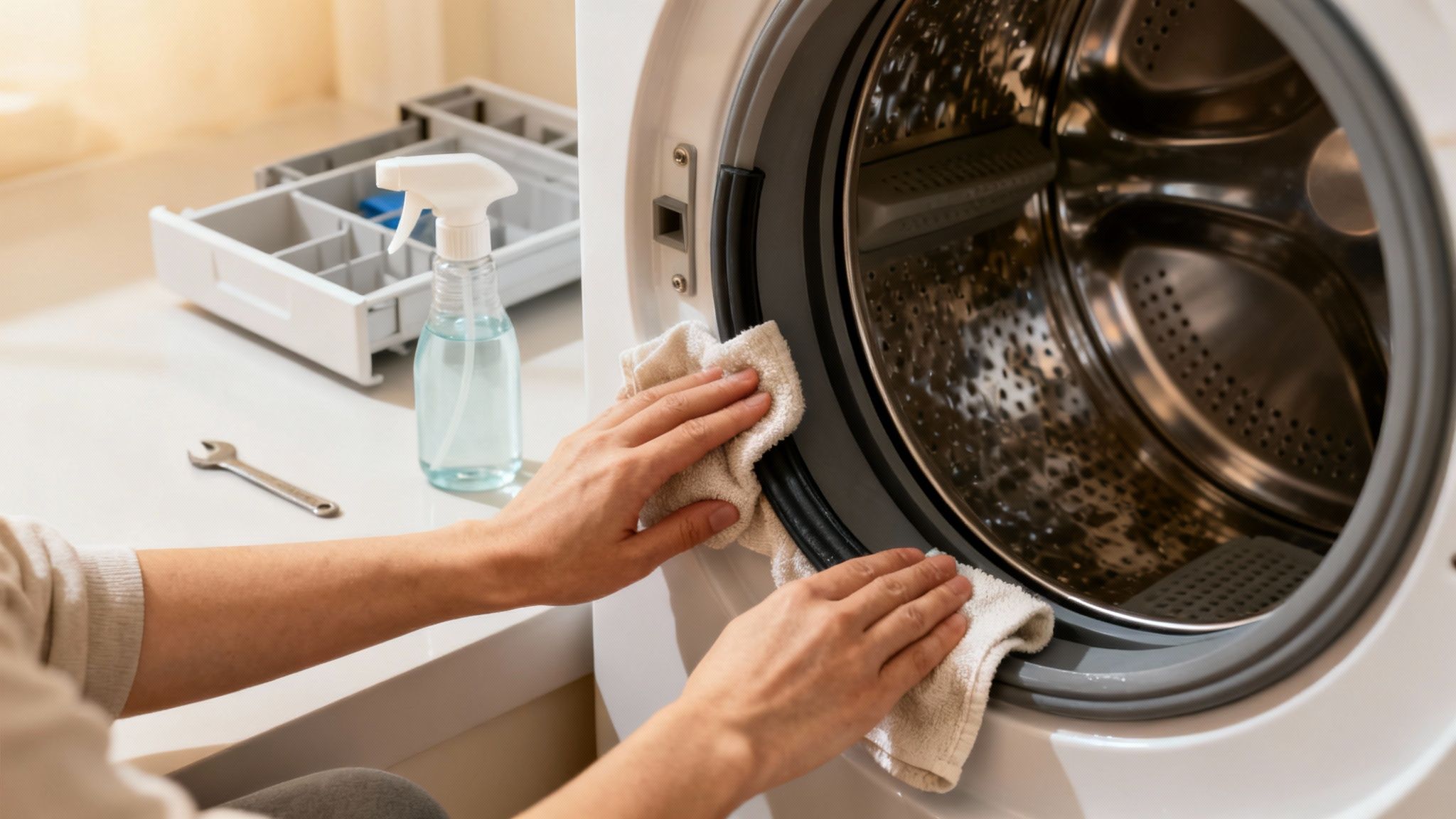
After moving the last load to the dryer, use a soft, dry cloth to wipe the inside of the rubber gasket and the glass door. This removes the leftover water that pools in these spots.
Let It Breathe
Next, always leave the washer door slightly ajar after you finish laundry. A small gap allows air to circulate inside the drum, helping the interior to dry completely. A closed door traps humidity. Also, pull the detergent drawer out slightly to let it air out.
Finally, use the right detergent. Choose a high-efficiency (HE) detergent made for front-loaders. Use only the amount recommended by the manufacturer. Using too much soap creates extra suds that can leave behind a sticky film. These small habits are the foundation of how to clean front load washer mold effectively. They help maintain a clean and healthy home with little effort. This philosophy of simple, consistent care creates a better home environment.
Common Questions About Washer Mold
It is normal to have questions when managing washer mold. Here are answers to a few common inquiries.
How often should I clean my washer?
A thorough cleaning once a month is a good frequency for most homes. This includes the gasket, dispenser, drum, and filter. The daily habits are also important. Wiping the gasket dry and leaving the door open will make a significant difference. In humid climates, you may consider a deep clean every few weeks.
Can I use vinegar or baking soda?
Vinegar and baking soda are common household cleaners. However, they may not be sufficient for the persistent grime in a washer. They might reduce a faint odor but often do not solve the underlying issue. Many washer manufacturers advise against using vinegar because its acidity can degrade rubber seals and hoses over time. A cleaner designed for the task is gentle on your machine.
The smell persists after cleaning. What should I do?
If a musty smell remains after cleaning, check the drain pump filter. This trap catches lint, hair, and other small items. It can become a hidden source of odors. Your owner’s manual will show you where it is and how to clean it. If the smell still persists, it may be time to consult a professional. They can check for issues deeper inside the machine.
At Luma Living, we believe that a truly clean home is simple, gentle, and effective. It is about caring for your family and your space with total peace of mind. Find out more about our science-backed cleaner at lumaliving.co.