


Seeing pink residue in the shower is a common household challenge. To clean it, a gentle cleaning solution and a soft brush are often all that is needed.
First, scrub the pink film to break up its slimy layer, known as a biofilm. Then, spray the area with a residue-free cleaner. Let the solution sit for a few minutes to work effectively, then simply wipe it away. This approach avoids harsh fumes and is suitable for use around your family. Here’s how to clean safely and simply.
Understanding the Pink Film in Your Shower
The pink or orange-colored film found in shower grout and along curtains is a frequent sight. While it resembles mold, it is a biofilm created by an airborne bacterium called Serratia marcescens.
Its appearance is not an indicator of a dirty home. It is a natural and normal part of a bathroom’s ecosystem. This bacterium thrives in damp, warm environments, feeding on soap and shampoo residue. This is why it commonly appears in shower corners, between tiles, and along the tub. Knowing what it is helps remove any unnecessary worry.
Why This Pink Residue Appears
A bathroom provides an ideal environment for this bacterium. After a hot shower, the air is humid and surfaces are damp, creating the moisture it needs to grow. The leftover soap scum and body oils serve as a food source, allowing the pink biofilm to form and spread.
This pink shower "mold" is a bacterium that grows when humidity exceeds 60%, a common occurrence in many households during a shower. In a bathroom with poor ventilation, Serratia can multiply quickly in temperatures between 68-86°F (20-30°C). This explains how grout can turn pink and slimy within days. For more detail, there are environmental health studies on how this bacterium grows.
The goal is not just to wipe away the pink film. It is about doing so in a way that feels safe and simple for everyone in your home, including children and pets.
A Gentle and Effective Solution
There is no need to use harsh or aggressive chemicals to address this common issue. A more thoughtful approach can keep your shower clean while supporting your family's well-being. A gentle method can clean the area effectively and simply.
Common Cleaning Methods and Their Downsides
When that slimy pink film appears, the first thought may be to use a harsh chemical cleaner. Many believe that only powerful, aggressive products like chlorine bleach can handle stubborn bathroom grime.
While these cleaners may remove the pink residue, they can introduce other issues into the home. This is particularly important for households with children and pets.
Fumes, Residues, and Unnecessary Risks
The most immediate concern with harsh cleaners is the fumes. In a small space like a bathroom, vapors from bleach or ammonia-based products can become strong quickly. The chemical smell can linger, potentially irritating sensitive noses and respiratory systems.
Another consideration is the residue left behind. These chemicals can leave a film on surfaces where children play during bath time. This is a trade-off many prefer to avoid. The pink film is not a dangerous mold infestation; it is simply a common bacterium.
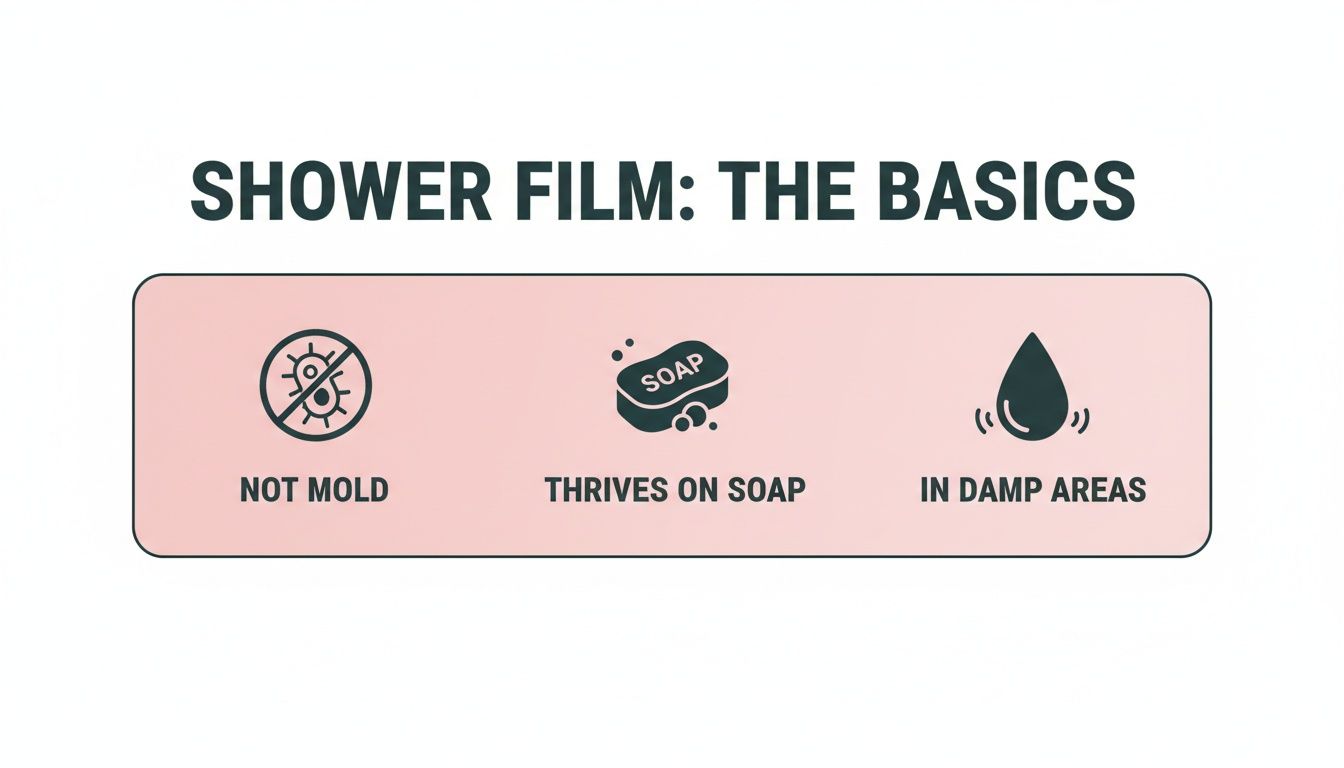
This perspective helps. You are not fighting a battle with your bathroom; you are simply cleaning it. For this task, aggressive methods are not required.
Comparing Common Cleaning Methods for Pink Residue
It can be difficult to select the right cleaner. This comparison outlines the pros and cons of common options, showing why a gentler approach often makes sense.
| Cleaning Agent | Effectiveness | Family & Pet Safety | Residue & Fumes |
|---|---|---|---|
| Chlorine Bleach | High, but can discolor surfaces. | Low. Releases harsh fumes and can cause skin/eye irritation. Not safe for ingestion. | Leaves behind a chemical residue and strong, lingering fumes. |
| Ammonia-Based Cleaners | Moderate to High. | Low. Very strong fumes that are dangerous in enclosed spaces. Toxic if ingested. | Can leave streaks and a strong, unpleasant odor. |
| Vinegar & Baking Soda | Moderate. Good for scrubbing away buildup. | High. Generally safe, but vinegar has a strong smell that can linger. | Can leave a gritty or hazy film if not rinsed thoroughly. |
| Hypochlorous Acid (HOCl) | High. Cleans effectively. | Very High. No harsh fumes, gentle on skin, and breaks down to saltwater. | None. Evaporates cleanly, leaving no film, scent, or residue. |
Choosing a cleaning method is not just about effectiveness. It is about what works for your family’s home and well-being.
Choosing a Gentler, More Effective Path
The objective is to find a cleaning method that supports a calm, healthy home environment. Opting for a family-safe solution means you can clean effectively without introducing unnecessary risks. It is about balancing a clean shower with peace of mind. Many families are looking for ways to disinfect without bleach for this reason. A simpler solution can provide the same results without the worry.
A Simpler, Science-Backed Way to Clean
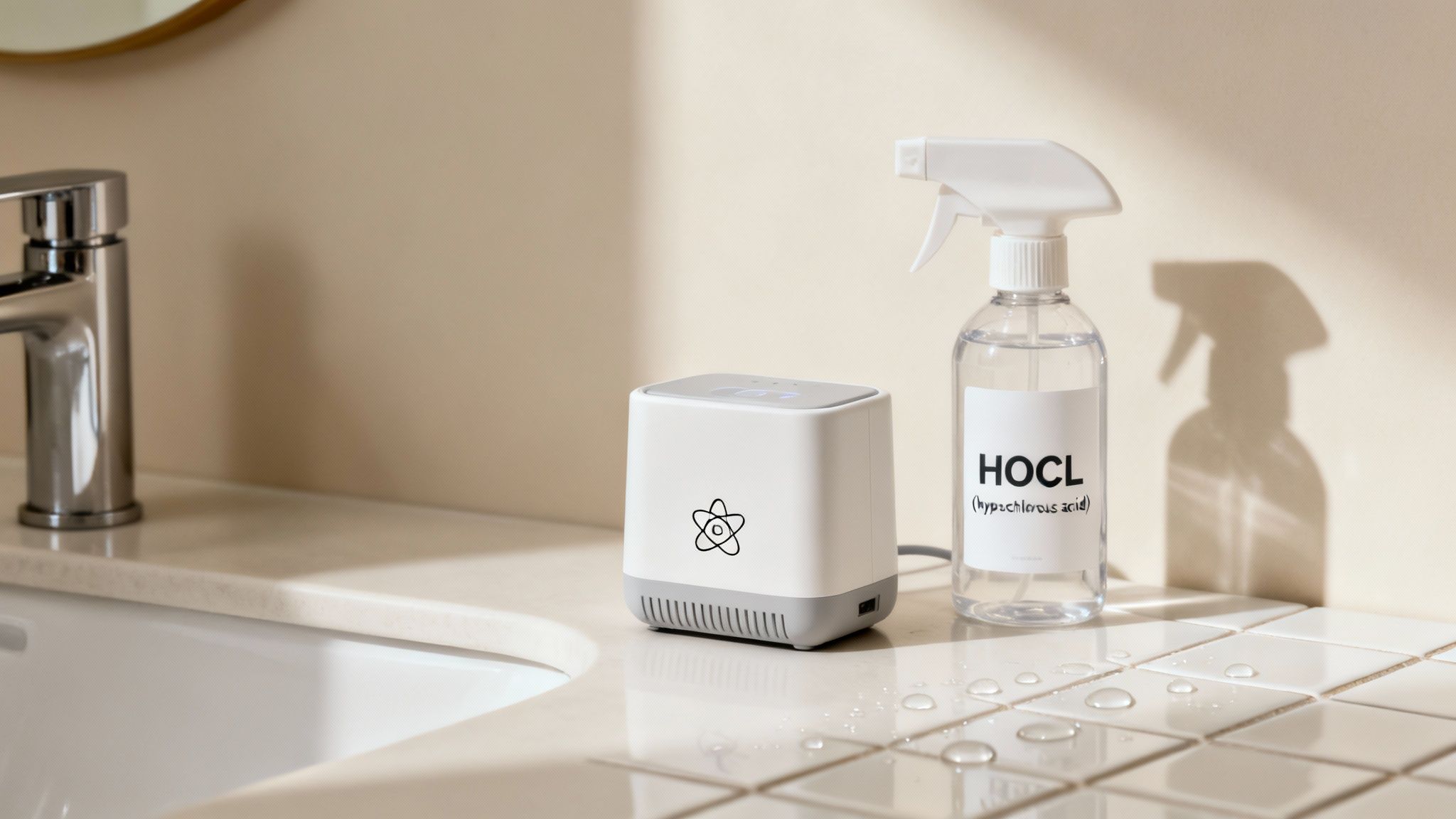
A better way to address the pink residue in your shower exists. It is a method that avoids harsh chemicals and creates a truly clean space without disrupting your home. This approach is centered on a compound called Hypochlorous Acid (HOCl).
While the name sounds technical, HOCl is the same substance the body's immune system produces to stay healthy. This connection to our own biology makes it uniquely gentle and well-suited for a home environment.
How This Simple Science Works
This cleaner is made from simple ingredients. Companies like Luma Living use water, salt, and electricity to create HOCl. The result is an effective cleaning solution with no added fragrances, dyes, or aggressive surfactants.
When sprayed on the pink biofilm, HOCl works to break it down. It cleans thoroughly and then evaporates, leaving nothing behind but a clean surface. It leaves no sticky films or residues. For more information, you can explore what Hypochlorous Acid is and the science behind it.
This method offers peace of mind from knowing exactly what you are bringing into your home. It is a more conscious approach to household care.
A Clean You Can Feel Good About
The benefit of this science-backed approach is its simplicity. Many conventional cleaners mask odors with perfumes or leave behind a chemical film. HOCl delivers an honest clean. It is a solution that respects your home as a sanctuary. You can confidently clean the pink residue knowing you are not introducing anything unnecessary into your living space.
This idea of using simple, effective science also applies to other household challenges. For instance, many proven DIY methods for removing hard water stains from glass use simple ingredients. It is part of the same thoughtful approach to home care.
Step-by-Step Guide to Removing Pink Residue
A complicated routine is not needed to get your shower clean again. Addressing pink residue is simple with the right tools. This process is designed to be straightforward and gentle, creating a clean space without unnecessary fuss. It allows you to achieve a clean shower without intense scrubbing or overwhelming fumes.
Step 1: Prep the Area
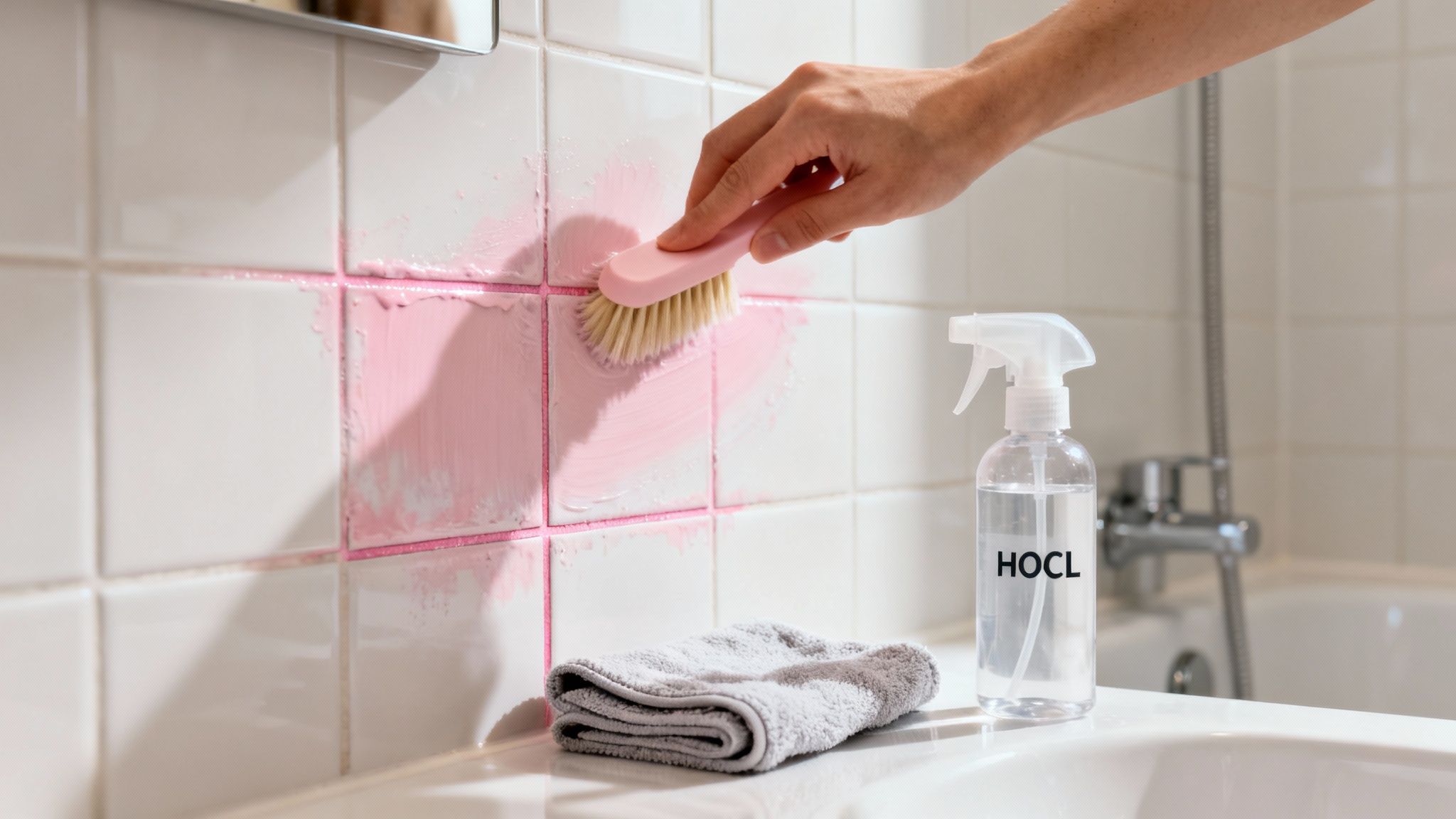
Before applying a cleaner, a quick pre-scrub can be helpful for thick patches of pink residue. Use a soft-bristled brush and a bit of water. This mechanical step helps to break up the slimy biofilm and loosen the buildup. This allows your cleaner to work more effectively at the source. Once you have done a light scrub, you are ready for the next step.
Step 2: Apply Your Cleaner
Take your Hypochlorous Acid (HOCl) solution and spray it liberally over all affected areas. Be sure to cover grout lines, shower corners, and any other spots with a pinkish hue. You will not have to worry about harsh fumes. Let the HOCl sit for a minute or two. This dwell time allows the solution to break down the remaining biofilm.
After a few moments, wipe the area with a clean microfiber cloth. You will be left with a completely clean surface, with no chemical smells or sticky residues.
Step 3: Focus on Prevention
Once your shower is clean, the goal is to keep it that way. A few simple habits can make a significant difference. Field trials have shown that a simple weekly cleaning can reduce this type of bacterial growth by up to 95%. Even a quick daily wipe-down can prevent 82% of buildup.
Small, consistent actions are more effective than occasional deep cleans with aggressive chemicals. This is particularly relevant when considering that the harshness of bleach is linked to allergic reactions in 22% of sensitive individuals.
A proactive approach is more about consistency than heavy-duty scrubbing. A light spray and a quick wipe a few times a week are often all you need.
Making a daily shower spray part of your routine helps manage moisture and soap scum. It is an easy way to stay ahead of pink residue and keep your bathroom a calm, clean space.
Keeping Your Shower Clean with Simple Habits
After cleaning your shower, the main goal is to maintain it. A few simple, intentional habits can help prevent the pink residue from returning. The key is to consistently manage moisture, which Serratia marcescens needs to thrive. These small adjustments create a bathroom environment that is less welcoming to bacterial growth.
Reduce Moisture After Every Shower
The most effective action is to manage moisture. The warm, steamy air after a shower creates a breeding ground for biofilm. Wiping down shower walls, glass doors, and the floor with a squeegee removes water droplets where bacteria multiply. This action takes less than a minute but makes a large impact.
Good ventilation is also critical. Run your bathroom's exhaust fan for 20 to 30 minutes after a shower to remove humid air. If you do not have a fan, opening a window or leaving the door open will help the space dry faster.
Maintain a Consistent Cleaning Rhythm
Regular maintenance prevents minor buildup from becoming a larger problem. A deep, strenuous scrub is not necessary every weekend. A light weekly spray with a gentle cleaner is often sufficient. Focus on trouble spots like grout lines, corners, the shower floor, and the drain. This small act disrupts the bacteria's food source and stops its growth cycle.
A proactive approach is more about consistency than intensity. Simple, regular actions are far more effective at preventing pink mold in the shower than occasional, aggressive cleanings.
This rhythm keeps your shower clean, reducing the need for heavy-duty cleaning sessions. For more tips on tile care, you can learn how to clean ceramic tile like a pro.
A Simple Prevention Checklist
This checklist breaks down the daily and weekly tasks that will help keep your shower free of pink residue.
| Action | Frequency | Impact on Moisture Reduction |
|---|---|---|
| Squeegee Shower Walls | Daily, after each use | High. Directly removes standing water from surfaces. |
| Run Exhaust Fan | Daily, for 20-30 minutes | High. Removes humid air from the entire room. |
| Wipe Faucet & Fixtures | Daily | Medium. Prevents water from pooling in crevices. |
| Weekly Maintenance Spray | Once per week | Medium. Cleans soap residue that feeds bacteria. |
| Wash Shower Curtain/Liner | Monthly | Low. Removes biofilm and soap scum from fabric surfaces. |
By incorporating these small steps into your routine, you create an environment where pink residue struggles to grow. This consistent care is key to maintaining a calm and clean space.
A Clean You Can Feel Good About
Keeping your home clean should not be a source of stress. When you see pink film in the shower, you do not need to use harsh chemicals or prepare for a difficult scrubbing session.
The goal is not just a clean surface; it is the peace of mind that comes with it. You want to know that your cleaning solution is effective and also gentle enough for everyone in your family. This confidence comes from using simple, residue-free, and fragrance-free solutions.
When you clean without compromise, you create a home that feels serene and healthy. It turns a routine chore into a simple act of care for your space and your family.
At Luma, our goal is to offer a simple way to maintain your home with science you can trust.
Common Questions About Pink Residue
Seeing this stubborn pink film can bring up a few questions. Understanding what you are dealing with makes it easier to handle. Here are some simple answers to provide clarity.
Is the Pink Stuff in My Shower Harmful?
The pink film, caused by the bacterium Serratia marcescens, is not a major health threat for most healthy people. It is more of a nuisance than a danger.
For individuals with a compromised immune system, the very young, the elderly, or pets, it can sometimes cause minor irritation. Keeping it managed is part of good household hygiene. Its presence is not a reason to panic or use harsh, fume-filled chemicals.
Can I Use an HOCl Cleaner on Other Bathroom Surfaces?
Yes. One of the benefits of a gentle hypochlorous acid (HOCl) solution is its versatility. It is suitable for almost any hard, non-porous surface in your bathroom.
You can use it on countertops, sinks, toilets, fixtures, and bath toys. It cleans them all without leaving behind chemical smells or sticky films. This makes it a great all-in-one cleaner for the entire room and simplifies your routine.
A consistent, gentle approach is always more effective than occasional, aggressive cleanings. Simple habits, combined with a cleaner you trust, are the key to maintaining a serene and healthy home environment for your family.
How Often Should I Clean to Prevent Its Return?
When it comes to preventing pink film, consistency is more important than intensity. After an initial cleaning, a light spray-down of your shower surfaces once a week is usually sufficient for maintenance. This helps manage the soap and shampoo residue that the bacteria feed on.
Pair this with simple daily habits, like wiping down walls with a squeegee and running your bathroom fan after a shower. These small actions make a large difference in reducing the moisture the bacteria needs to thrive.
At Luma Living, we believe that cleaning should be a simple act of care, not a chore that introduces harsh chemicals into your home. Our HOCl-based cleaner offers a fragrance-free, residue-free solution that provides a confident clean for every surface. Discover a simpler way to care for your home at lumaliving.co.