


An effective granite cleaner is one that works gently. It should not rely on harsh chemicals or leave behind sticky residues. This approach is better for your family and for the stone itself. The goal is a cleaner with simple ingredients and a pH-neutral formula. It should handle daily messes without stripping your countertop's sealant.
Here’s how to clean safely and simply.
Caring for Your Home’s Granite Surfaces
Your granite countertops are central to your daily life. They are the backdrop for everything from morning breakfasts to quiet evening conversations. They often become the heart of the home.
Maintaining their beauty is about more than just appearance. It is about ensuring the space is clean and welcoming for everyone. The challenge is finding a cleaner that works without being aggressive. It needs to cut through daily grime without introducing harsh chemicals. It also should not leave the filmy residue common to many household products.
Why a Gentle Approach Matters
Granite is a durable material, but its strength can be misleading. As a porous natural stone, it relies on a protective sealant. This sealant acts as a barrier against spills like wine, oil, or juice. It prevents them from seeping in and causing a permanent stain.
Many all-purpose cleaners contain acids or abrasive agents. These ingredients can slowly eat away at that essential barrier over time.
This gradual degradation leaves the stone vulnerable to etching and discoloration. A dedicated, gentle cleaning routine is a practical way to protect your investment. The popularity of granite is clear, as the global market was valued at around USD 100 billion in 2024. With this beautiful stone in so many homes, it is important to know how to maintain it without causing harm.
Choosing the right cleaner is an act of care. It helps create a healthier home, free from strong fumes and sticky surfaces. This gives you peace of mind where your family gathers most.
The Foundation of Simple Care
The key is to build a simple, consistent cleaning habit. Instead of intense scrubbing sessions, think of it as a mindful daily routine. You can find more comprehensive instructions on how to clean natural stone countertops, but the basics are straightforward.
This method focuses on what truly matters. It creates a clean surface that is safe for food preparation, children, and pets.
The Hidden Risks in Common Cleaning Products
Using a go-to all-purpose spray for a quick cleanup can be tempting. For a natural stone like granite, this convenience can cause long-term damage.
Most common cleaners are formulated with harsh ingredients. Acids, ammonia, and abrasive agents are too aggressive for granite. Over time, these chemicals attack the protective sealant on your countertops.
Once that barrier is compromised, the porous stone is left exposed. It can then absorb spills like wine or oil, leading to stubborn stains.
Why Certain Ingredients Cause Harm
The issue lies in chemistry. Granite is tough, but its mineral structure reacts poorly to highly acidic or alkaline cleaners.
- Acidic Cleaners: Ingredients like vinegar or lemon juice can "etch" the granite's surface. This chemical reaction dulls the polished finish, leaving a permanent cloudiness.
- Alkaline Cleaners: Strong alkalis like bleach or ammonia are equally problematic. They break down the resin-based sealants that protect the stone from stains.
Consumers are becoming more aware of these issues. The global market for granite-specific cleaners was valued at around USD 1.2 billion in 2024. It is projected to reach USD 2.1 billion by 2033. This shows a shift toward smarter, safer formulas that protect home investments. You can see more details on this preference for specialized care at marketintelo.com.
The principles of a better approach are simple.
True granite care is about finding a balance of clean, safe, and simple.
To help you identify problematic products, here is a guide to what to avoid.
Common Cleaners to Avoid on Granite Surfaces
| Cleaning Agent | Potential Risk to Granite | Reason for Damage |
|---|---|---|
| Vinegar | Etching, Dulling | The acetic acid chemically reacts with minerals in the granite, dissolving the surface and removing its shine. |
| Bleach | Sealant Degradation, Discoloration | Its strong alkaline nature breaks down the resin sealant, and it can lighten or discolor darker stones over time. |
| Ammonia (e.g., Windex) | Strips Sealer, Dulls Finish | Like bleach, ammonia is highly alkaline and aggressively degrades the protective sealant, leaving the stone vulnerable. |
| Abrasive Powders (e.g., Comet) | Scratching, Etching | The fine particles create micro-scratches on the surface, which ruins the polished finish and traps dirt. |
| Lemon/Citrus-Based Cleaners | Etching | The citric acid eats away at the granite's surface, similar to vinegar, resulting in a dull, cloudy appearance. |
These products are effective in other areas of the home. They are simply not suited for the unique chemistry of natural stone.
The Problem with Residue
Beyond the risk of direct damage, many conventional cleaners leave behind a film. You might feel a slightly sticky or slick surface that attracts dust and fingerprints.
These chemical residues are left on the very surfaces where you prepare food.
A genuinely safe granite cleaner should not just move grime around. It needs to clean effectively without leaving anything behind.
The goal is a truly clean surface, free from both grime and the chemical footprint of the cleaner itself. This provides confidence that your kitchen is a safe space for everyone in your home.
Choosing a pH-neutral cleaner made for stone is a practical step. It helps preserve the beauty and integrity of your countertops for years.
A Better Way: Simple, Science-Backed Cleaning
There is a way to get granite countertops genuinely clean. It is both effective and surprisingly gentle. The approach moves past aggressive sprays and embraces a simpler, science-backed method. This can bring peace of mind to the heart of your home.
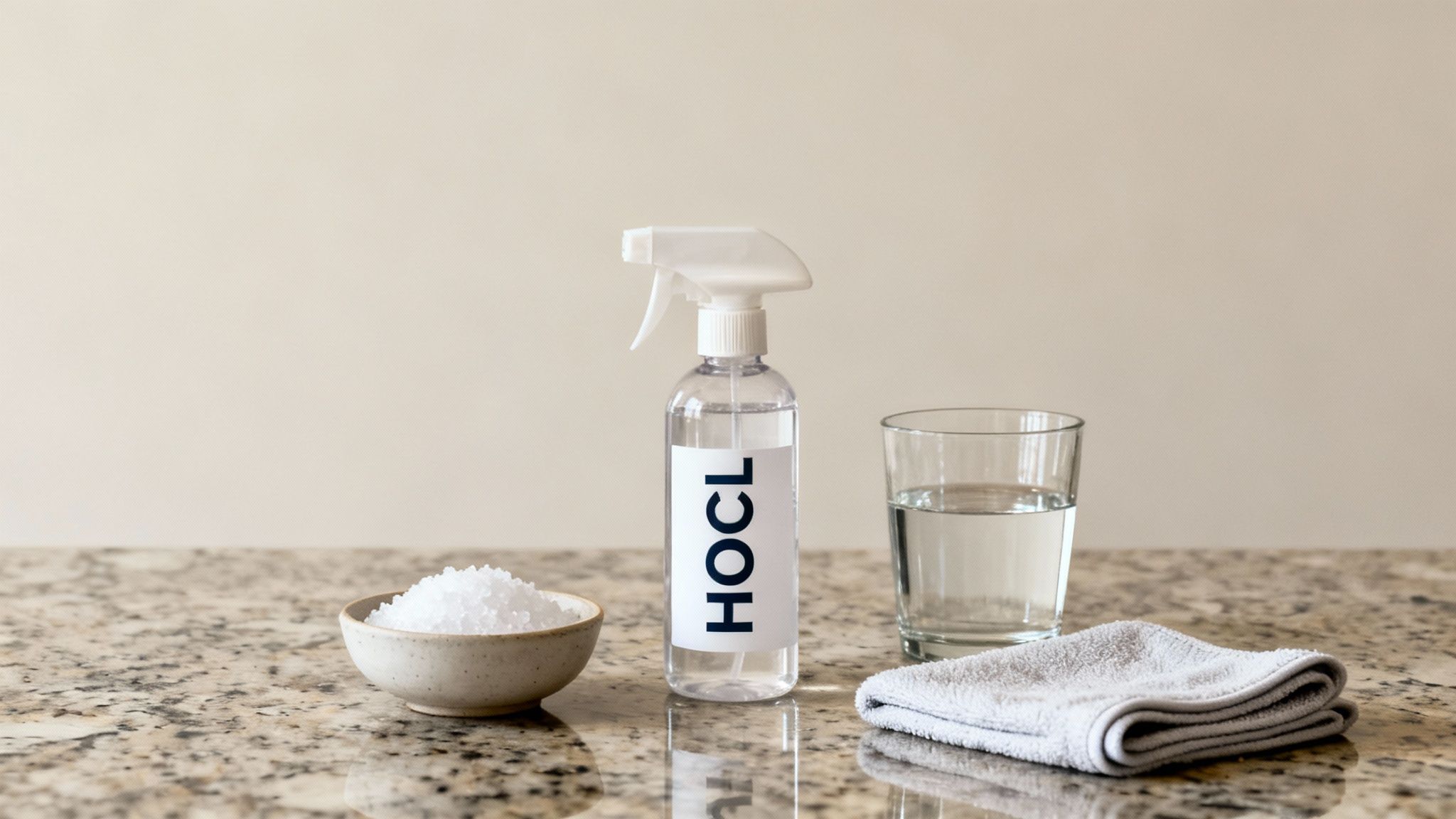
The solution is Hypochlorous Acid (HOCl). While the name may sound complex, the substance itself is beautifully simple. It cleans powerfully without stripping your granite's sealant. It also does not leave behind the sticky, scented residues of conventional products.
The Science of Simple Ingredients
Hypochlorous acid is made from three simple ingredients: salt, water, and electricity. Through a process called electrolysis, this basic trio becomes a potent cleaning agent.
This is the same substance the human immune system produces to respond to pathogens. This connection speaks to its nature—it is effective, yet inherently gentle. Unlike acidic or alkaline cleaners that damage stone, HOCl is pH-neutral. This makes it ideal for sealed granite.
A pH-neutral formula tackles grime without eating away at the protective sealant. You can learn more about the science in our guide on what is hypochlorous acid.
Cleaning Without Compromise
One of the greatest benefits of an HOCl-based solution is what it lacks. It does not leave anything behind, making it a true residue-free cleaner.
After you spray and wipe, the HOCl breaks back down into a mild saline solution. It then evaporates completely. This means no chemical streaks, sticky films, or overpowering fragrances. It leaves a clean surface where you prepare your family's food.
This is particularly helpful for homes with children and pets. The absence of artificial scents also helps create a calmer home environment.
When a cleaner does its job and then disappears, it sets a new standard for what "clean" means. It provides the confidence to use your counters freely, knowing they are simply clean.
A Foundation of Trust
Choosing a safe granite cleaner is about creating a healthy living space. It allows your family to gather without worry about what’s on the countertops.
An HOCl solution aligns with this philosophy perfectly. It cleans well, respects the integrity of your stone, and leaves no chemical footprint. This approach is about working smarter and more gently.
Understanding the science behind it can provide confidence in your cleaning method. This supports both a clean home and your family’s well-being.
Your Simple Routine for Daily Granite Care
Caring for your granite countertops can be straightforward. A simple, consistent routine is more effective than occasional deep cleaning. It is about building a gentle habit that preserves your stone’s beauty.
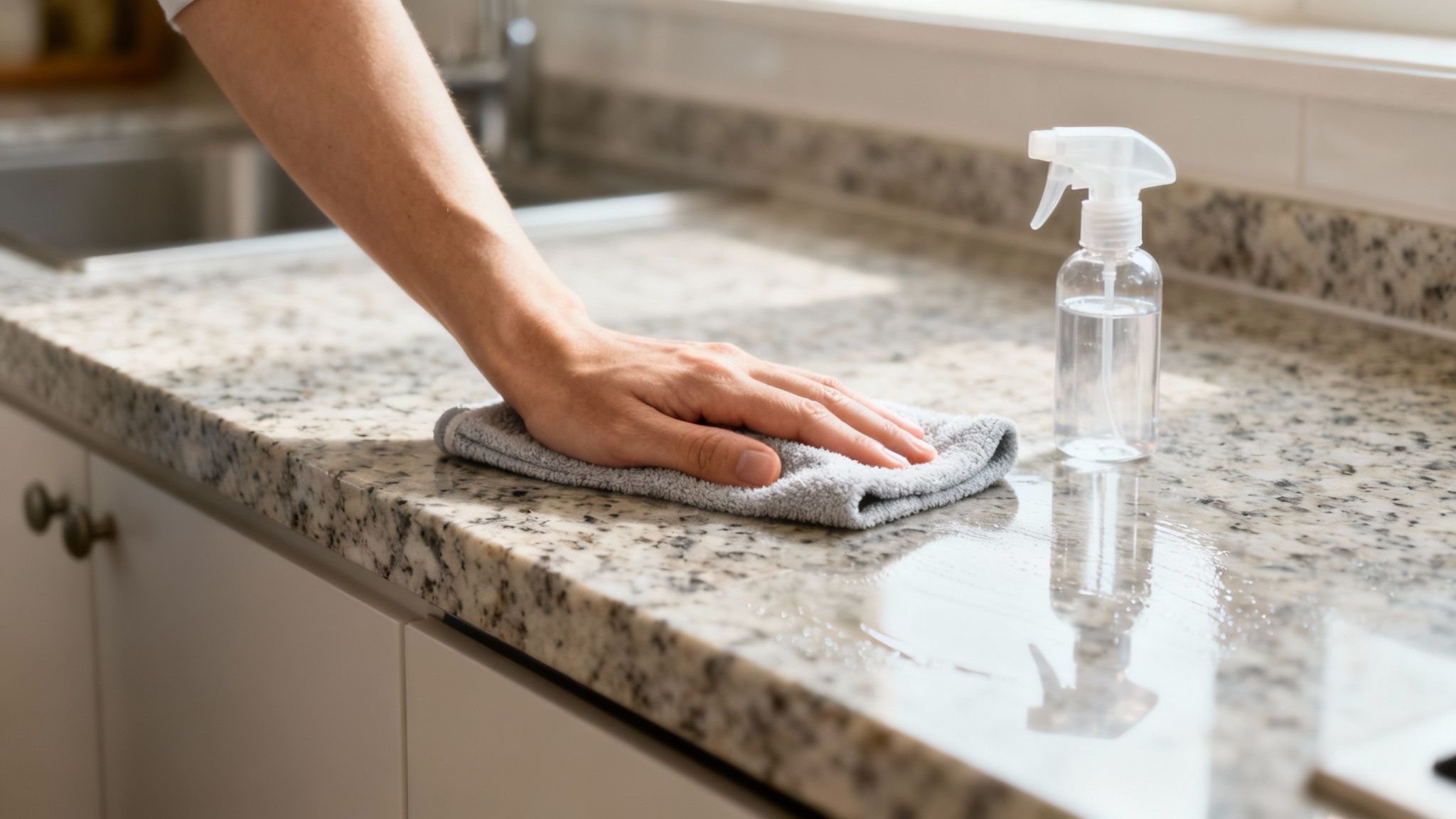
First, clear the surface of crumbs with a soft, dry cloth. This step prevents tiny particles from scratching the stone during cleaning.
Next, lightly mist the countertop with a safe granite cleaner. A pH-neutral solution made with Hypochlorous Acid (HOCl) is ideal. It cleans without harming the sealant. Finish by wiping the surface with a clean, plush microfiber cloth for a streak-free polish.
Responding to Spills and Maintaining the Seal
Kitchen messes are inevitable, but a quick response makes a difference. When spills happen, blot them immediately with a soft cloth. Blotting contains the spill, whereas wiping can spread it.
After blotting, spray the area with your cleaner and wipe it clean. This immediate action is the best way to prevent staining. A good sealant provides a line of defense, buying you time to clean up.
A simple daily wipe-down does more than just clean. It reinforces a sense of calm and order in your kitchen. This small act of care maintains the heart of your home.
Checking Your Granite’s Sealant
Over time, even the best sealant will wear down. There is an easy way to check if it’s time to reseal your countertops.
- The Water Test: Pour a small amount of water, about three inches across, onto the counter.
- Observe: Let it sit for about 15–30 minutes. If the water still beads on the surface, your sealant is working well.
- Take Action: If the water has started to soak in or has darkened the stone, the sealant is no longer effective. It is time to reseal your countertops to protect them from moisture.
Performing this check every few months helps you stay ahead of potential damage. You can find more tips in our post on how to clean kitchen countertops naturally. It is a proactive step that protects your investment and provides peace of mind.
Keeping Your Granite Beautiful for the Long Haul
Daily cleaning is a great habit for maintaining your countertops. Long-term granite care focuses on protecting the stone itself. This comes down to maintaining its protective sealant. Understanding how to care for this barrier is the best way to preserve your countertop's beauty.
Proactive care is always easier than dealing with a stain later. When you learn to spot the signs of a weakened sealant, you can address the issue early. This shifts maintenance from a chore into a simple, mindful practice.
The 15-Minute Water Test: Is Your Sealant Still Working?
There is a simple way to check your sealant’s health without special tools. The "water test" gives you a clear picture of your granite's condition.
Here is how to perform it:
- Pour a small puddle of water onto the countertop, about three inches across.
- Leave it for approximately 15 to 30 minutes.
- Observe the result. If the water is still beaded up on the surface, your sealant is in great shape. If the water has soaked in and left a dark spot, it’s time to reseal.
This test removes the guesswork from sealant maintenance. Performing it every few months helps you ensure your granite is always protected.
Gently Handling Common Countertop Issues
Even with the best care, minor issues like water spots can occur. The key is to handle them gently with methods that will not harm the stone.
- Water Spots: Hard water can leave behind mineral deposits, especially around faucets. Spray the area with your pH-neutral cleaner, let it sit for a minute, then wipe firmly with a clean microfiber cloth.
- Light Food Stains: For faint discoloration, a paste of baking soda and water may help. Apply it to the spot, cover it with plastic wrap, and let it sit for several hours before gently wiping it away. It is always wise to test this method on a hidden area first.
The demand for gentle, effective cleaners has grown. The stone cleaners market was valued at USD 1.5 billion in 2024 and is expected to continue growing. This shows a real shift toward formulas that protect, not just clean. You can see more on this trend at Verified Market Reports. Our guide to choosing a non-toxic surface cleaner also offers more context on making safe choices.
Protecting your investment is about consistency, not complexity. A gentle daily wipe, a periodic sealant check, and a calm approach to minor spots are all you need to keep your granite looking its best.
This mindful maintenance ensures your countertop remains a source of pride.
Common Questions About Cleaning Granite
A few questions frequently arise when it comes to caring for granite. Getting clear answers helps you feel confident in your cleaning routine. Let's address some of the most common ones.
How Often Should I Clean My Granite Countertops?
A quick daily wipe-down with a safe granite cleaner is the best practice. This simple maintenance clears away crumbs, spills, and fingerprints before they can build up.
For bigger messes like wine, oil, or juice, clean them up right away. This is the key to preventing stains, even on well-sealed granite.
Is a pH-Neutral Cleaner Really That Important for Granite?
Yes, it is the most critical part of safe granite care. As a natural stone, granite is sensitive to harsh chemicals.
Anything acidic, like vinegar, or strongly alkaline, like bleach, can degrade the protective sealant. Over time, these cleaners may even etch and dull the stone itself. This leaves it vulnerable to permanent stains and damage.
Choosing a cleaner with the right pH is the foundation of proper granite care. It works with the stone, not against it, preserving the sealant that acts as its primary defense.
Can I Just Use a DIY Cleaner on My Granite?
Many DIY cleaning recipes are not suitable for granite. The most common ingredient to avoid is vinegar, which is too acidic. It can slowly damage your sealant and the stone's finish.
In an emergency, a few drops of a pH-neutral dish soap mixed with warm water can be used. However, soap can leave behind a residue that builds up over time, creating a dull film.
A professionally formulated, safe granite cleaner is a more reliable choice. A Hypochlorous Acid (HOCl) solution cleans effectively without risk of damage or residue.
For a simple approach to daily cleaning that is both pH-neutral and residue-free, Luma Living’s approach is centered on gentle effectiveness. Our HOCl-based cleaner provides a powerful clean without harsh chemicals, helping to keep countertops safe for the entire family. Learn more about our philosophy at https://lumaliving.co.