


Creating a clean space for your baby is about finding a simple, healthy rhythm for your family. The challenge is keeping toys clean without leaving behind harsh chemicals, fragrances, or sticky residues—especially since most toys end up in a little one's mouth. A household cleaning challenge needs a calm, confident solution. Here’s how to clean safely and simply.
Why a Simple Toy Cleaning Routine Matters
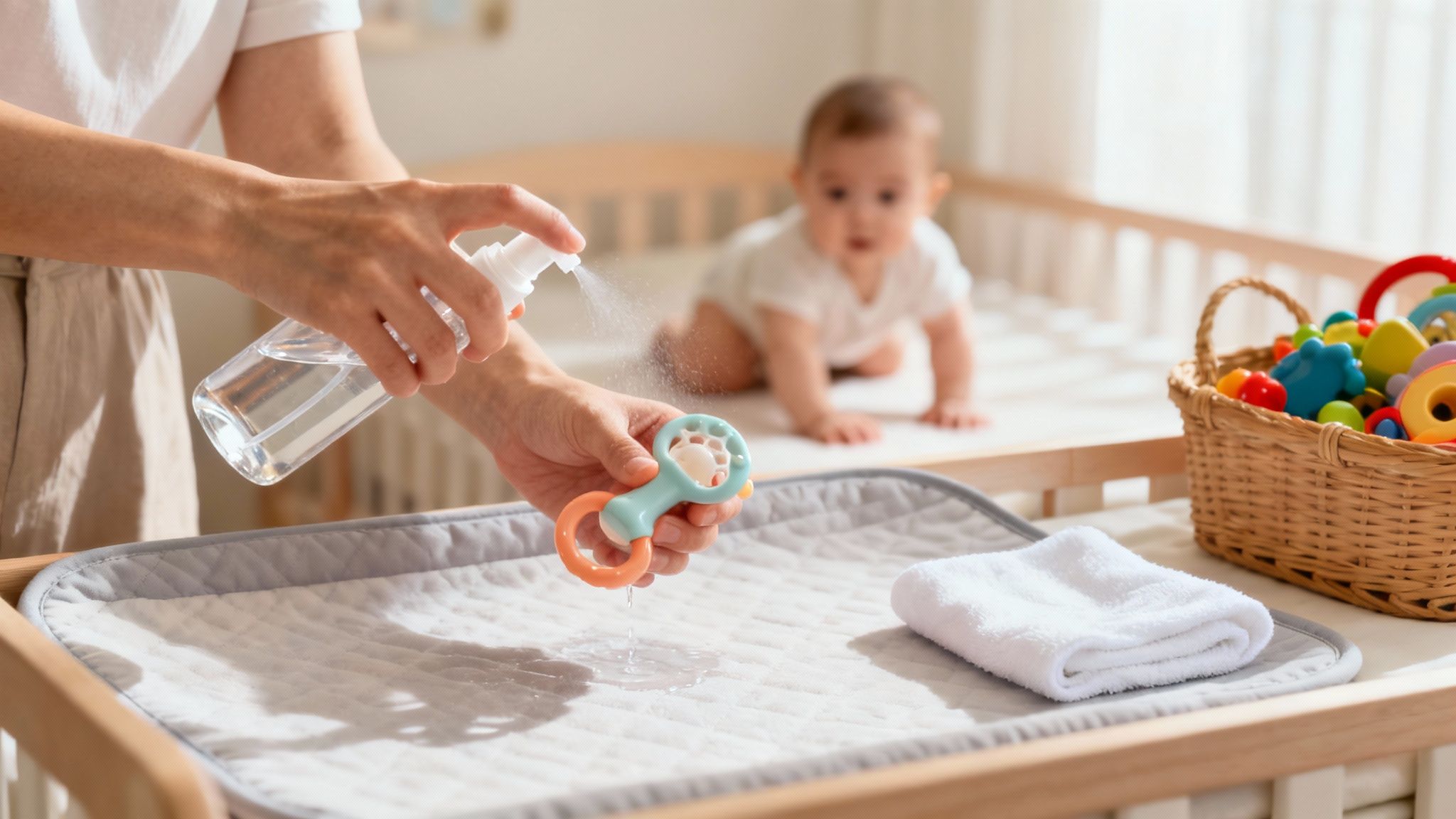
Babies learn about the world with their hands and mouths. Every block, teether, and book is part of their sensory exploration. This natural stage of development puts the cleanliness of those well-loved toys front and center for every parent. It’s a practical and emotional part of creating a safe, nurturing space.
Choosing the right toy cleaner for your baby is a decision that impacts the health of your home. The surfaces they touch and teethe on every day should be clean, but not at the cost of introducing harsh ingredients. This concern is why many families are rethinking their cleaning habits.
A Focus on Family Well-Being
The cleaner used for a baby's toys impacts the whole house. It affects family members and pets who share the same space. A fragrance-free solution is important, as strong scents can irritate a baby’s developing respiratory system.
By opting for a cleaner without harsh chemicals, you create a healthier environment for everyone. It is a mindful choice that supports the well-being of your entire household. Peace of mind comes from knowing your cleaning solution works with, not against, the materials your baby loves.
Common Missteps in Cleaning Baby Toys
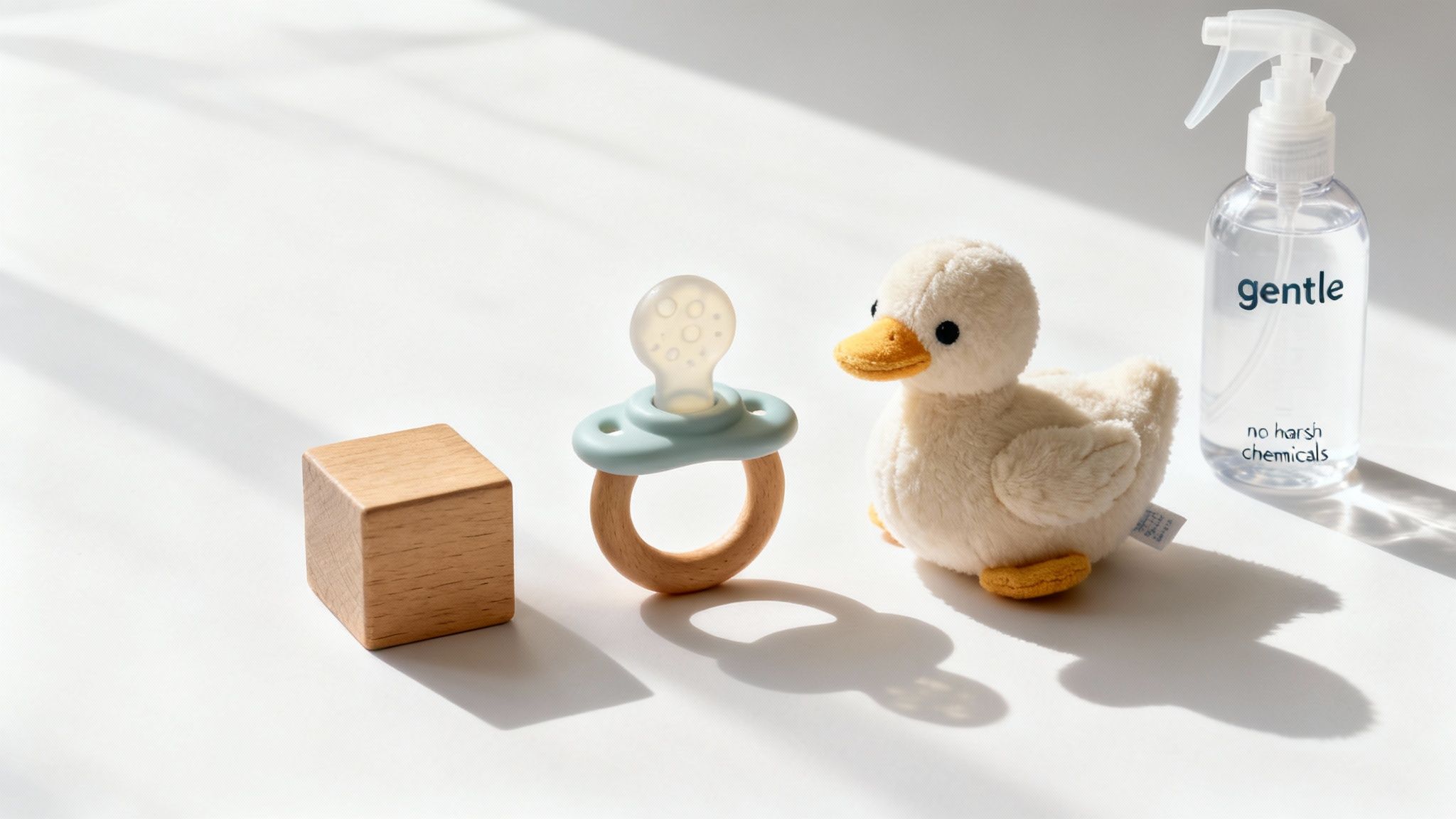
Familiar household products often seem like the simplest choice for cleaning. Yet, some of the most common methods come with hidden drawbacks, especially for items that go in a baby's mouth. The goal is to clean without leaving anything questionable behind. An effective toy cleaner for a baby should be gentle and leave no trace.
The Vinegar and Water Approach
A mix of vinegar and water is often suggested as a cleaner. While it has its uses, it is not always the best choice for the nursery. The acidity in vinegar can be tough on certain materials over time, making some plastics brittle with repeated use. On wooden toys, it can strip delicate finishes, and the strong smell can be off-putting.
The Dish Soap Dilemma
Washing toys in soapy water seems like a practical solution. It is great at cutting through grime, but the real issue is what gets left behind. Dish soaps often contain fragrances and surfactants designed to cling to surfaces, even after rinsing. This residue can leave a sticky film on plastic or silicone toys, which means your baby might be mouthing traces of soap.
A truly clean surface is free of both grime and the cleaning product itself. The ideal toy cleaner works effectively and then vanishes, leaving no scent, taste, or chemical film behind.
Relying on Conventional Household Cleaners
It is tempting to grab an all-purpose spray for a quick wipe-down. Those products are made for floors and countertops, not for items a baby will chew on. They are often formulated with a mix of chemicals, dyes, and strong fragrances designed to linger. That residue can irritate sensitive skin. A gentle toy cleaner for baby items is formulated without those additives.
A Better Way: The Gentle Science of HOCl
There is a better way to clean baby toys, one that avoids harsh chemicals and fragrances. The answer is Hypochlorous Acid, or HOCl. It may sound complex, but it is a substance our own immune systems create to help us heal. This makes it a reassuring choice for a family home.
When you clean with an HOCl-based spray, you are using a compound that is part of our own biology. It is harnessed for a new purpose: simple and effective cleaning.
What is Hypochlorous Acid?
The formula for HOCl is very simple. It’s made from just three things: water, salt, and electricity. Through a process called electrolysis, a gentle electrical current passes through a simple saltwater solution. This transforms it into a remarkably effective cleaner.
This process creates a cleaner that is free of:
- Alcohols
- Ammonia
- Dyes
- Fragrances
- Harsh chemical additives
The result is a pure cleaner that leaves no residues behind. After it cleans and dries, it simply breaks down into a mild saltwater solution. All that remains is a clean surface, which is ideal for any toy cleaner baby might encounter.
Choosing a cleaner based on HOCl is about trusting gentle science. It’s a substance that cleans effectively without compromise, offering a simple way to maintain a healthy home for your family.
The science is straightforward, offering a clear path away from harsh conventional cleaners. By understanding what HOCl is, you can feel genuinely good about the products you bring into your home. You can learn more about the science behind safe cleaning in our dedicated article.
A Simple Guide to Cleaning Baby Toys
A reliable cleaning routine helps create a calm and confident home. When you have a single, trusted cleaner, wiping down toys becomes a quick, reassuring moment in your day. Here are minimal, practical ways to clean different types of toys.
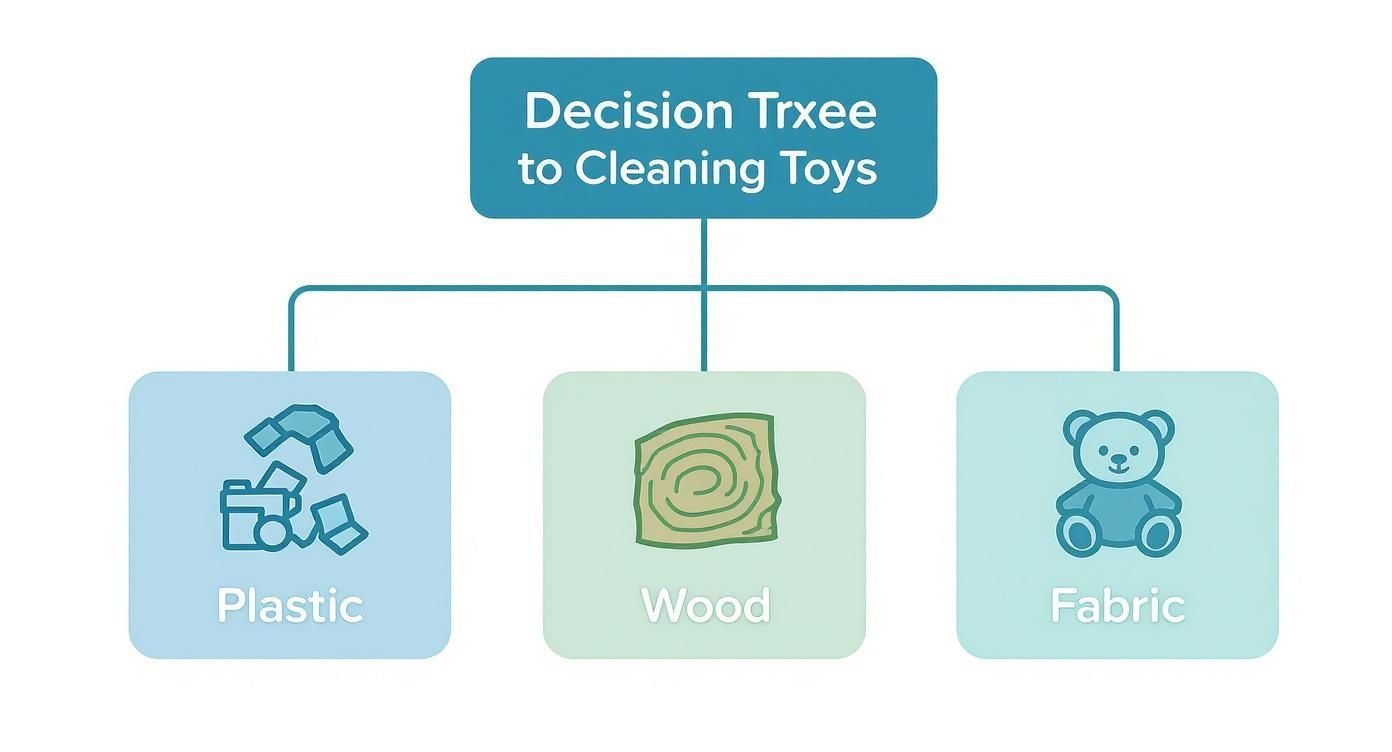
A gentle approach, slightly adjusted for each material, is all you need to keep things clean and safe.
Hard Plastic and Silicone Toys
For non-porous items like plastic blocks and silicone teethers, the process is easy. Spray a light mist directly onto the toy's surface. You can wipe it dry with a clean cloth or let it air dry. Because a cleaner like Luma Living is residue-free, there is no need to rinse it off. This method also works well for other hard surfaces, as detailed in our guide on how to clean acrylic.
Wooden Toys
Wood is a wonderful, natural material for toys. Its porous nature means it needs a slightly different touch. Instead of spraying the toy directly, spray a clean, soft cloth first. Then, gently wipe down the wooden surface. This cleans effectively without oversaturating the wood, helping to prevent damage over time.
Soft and Fabric Toys
For plush animals and soft books that cannot go into the washing machine, spot cleaning is effective. Spray a small amount of a gentle toy cleaner directly onto the soiled area. Use a clean cloth to gently blot the spot. This technique lifts away grime without soaking the fabric.
Quick Cleaning Guide For Baby Items
| Item Type | Recommended Cleaning Method | Frequency |
|---|---|---|
| Plastic & Silicone Toys | Spray directly, then wipe or air dry. | Daily or as needed. |
| Teethers & Pacifiers | Spray directly, air dry. No rinse needed. | After each use, especially if dropped. |
| Wooden Toys | Spray a cloth, then wipe the toy gently. | Weekly or for spot cleaning. |
| High Chair Tray | Spray directly, wipe clean with a cloth. | After every meal. |
| Fabric Toys (Spot Clean) | Spray soiled area, blot with a clean cloth. | As needed for spills or dirt. |
| Changing Mat | Spray surface directly, wipe clean. | Daily and after messy changes. |
This table reinforces how a single, gentle cleaner can handle most surfaces your baby touches.
A Confident Approach to a Clean Home
Caring for your baby's space should bring you peace of mind. It is about creating a simple, effective routine for a calm, healthy home. The goal is a thoughtfully clean environment, free from harsh chemical residues and overpowering fragrances.
Confidence comes from knowing the products you use are gentle and effective. When you can trust what’s in the bottle, the daily wipe-down of a dropped teether becomes a simple act of care. By embracing the simple science of Hypochlorous Acid (HOCl), you can simplify your routine without compromise.
Clean toys are just one part of the puzzle. It is also about creating the perfect play environment for them to explore. Every choice helps build a nurturing space.
Peace of mind is knowing that your efforts to create a clean home are also supporting a healthy one. True cleanliness is simple, safe, and leaves nothing behind but a feeling of well-being for your entire family.
This approach—built on transparency, gentle science, and family safety—is at the heart of Luma Living’s approach. A toy cleaner for a baby should support your peace of mind, letting you focus on the moments that matter.
Common Questions About Cleaning Baby Toys
It is normal to have questions when trying a new routine for your little one. Clear, calm answers can help you feel completely confident in what you are using. Here are some of the questions we hear most often from parents.
A good, science-backed toy cleaner for a baby should make your life easier.
How often should I clean my baby's toys?
This depends on how much a toy is used. High-contact items like teethers and pacifiers benefit from a quick wipe-down every day. For the rest of the toy bin, cleaning a few times a week is a practical approach. If something is visibly dirty or gets dropped, you will want to clean it before it goes back in their hands.
Is this type of cleaner safe if my baby licks the toy after cleaning?
Yes, that is the core benefit. A cleaner made with Hypochlorous Acid (HOCl) is designed with that exact scenario in mind. HOCl is created from salt, water, and electricity, so it leaves no harsh chemical residues. It cleans the surface and then simply evaporates. Once a toy cleaned with an HOCl solution is dry, there is no need to rinse it off.
Can I use this toy cleaner on high chairs and changing mats?
Absolutely. The versatility of a gentle, multi-purpose cleaner is one of its best features. It is well-suited for non-porous surfaces around the nursery and home.
You can confidently use the same trusted solution on:
- High chair trays and frames
- Changing tables and mats
- Play mats and activity centers
- Pacifiers and bottle nipples
Using one reliable product for many different things helps simplify your routine and frees up your mental energy.
At Luma Living, we believe cleaning should be simple, safe, and effective. Our HOCl-based cleaner is designed to give you peace of mind, offering a gentle yet powerful solution for your entire home. Learn more about our commitment to clean without compromise at https://lumaliving.co.